
News
Breaking Bangladesh Boycott Row: Players Demand Apology
16 Jan 2026, 8:17 pm
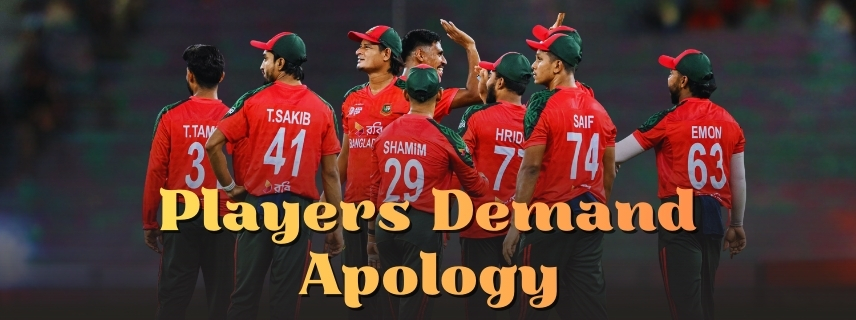
Bangladesh cricket remains engulfed in controversy as players signal they are willing to end the Bangladesh boycott only if a public apology is issued by BCB director Najmul Islam. The standoff has disrupted domestic competitions and placed the Bangladesh Cricket Board under intense pressure at a critical moment.
What Triggered the Bangladesh Boycott?
The Bangladesh boycott began after Najmul Islam made disparaging remarks about national players, including comments questioning their achievements and suggesting no compensation was owed if they missed the T20 World Cup. These statements sparked widespread anger within the dressing room and across the cricketing community.
Players React to Najmul Islam’s Comments
Senior players and representatives made it clear that the Bangladesh boycott was not about money, but respect. All-rounder Mehidy Hasan Miraz strongly criticised the remarks, while the Cricketers’ Welfare Association of Bangladesh highlighted how players’ incomes are supported by ICC revenues and sponsorships.
CWAB’s Firm Stand During Bangladesh Boycott
CWAB president Mohammed Mithun demanded Najmul’s removal as a director, stating that the Bangladesh boycott would continue until accountability was ensured. The association stressed that internal disciplinary processes should not override public responsibility.
BCB’s Response and Partial Action
The BCB responded by removing Najmul Islam from the Finance Committee, but this failed to fully satisfy players involved in the Bangladesh boycott. Cricketers insist that stepping down from committee duties is not enough to restore trust.
Apology Dispute Fuels Bangladesh Boycott
Najmul’s willingness to apologise only in a closed-door meeting further aggravated the Bangladesh boycott. Players rejected the idea, insisting that public remarks require a public apology to close the matter transparently.
Impact on Domestic Cricket
The Bangladesh boycott led to the suspension of Bangladesh Premier League and Dhaka Premier League matches, raising concerns over tournament credibility and commercial commitments tied to the domestic calendar.
Conditional Return Offered by Players
CWAB later announced that players would consider ending the Bangladesh boycott if Najmul issued a public apology and due process for his removal continued without delay. This conditional olive branch placed responsibility squarely on the BCB.
Uncertainty Clouds Immediate Future
Despite discussions, optimism remains limited as insiders believe the Bangladesh boycott may resurface if assurances are not honoured. Players seek written guarantees to avoid future disruptions.
Defining Moment for Bangladesh Cricket
The Bangladesh boycott has exposed deeper governance issues within the BCB. How the board resolves this crisis may define its relationship with players and shape the stability of Bangladesh cricket moving forward.