
News
Gill Captaincy Faces Major Criticism After NZ Onslaught
19 Jan 2026, 9:48 pm
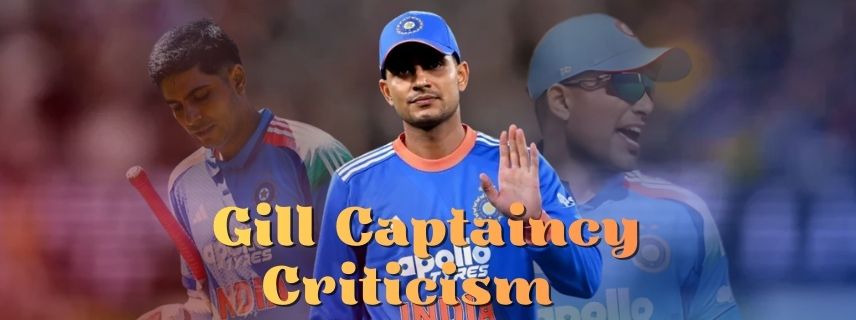
Gill Captaincy Under Scrutiny After Costly Tactical Calls
Shubman Gill’s first major test as India’s ODI leader turned into a tough learning curve, with former players openly questioning his decisions during the series-deciding match against New Zealand. The Gill captaincy debate intensified after India allowed Daryl Mitchell and Glenn Phillips to build a massive partnership that took the game away from the hosts. Despite early wickets, India failed to apply sustained pressure, raising concerns about bowling rotations and timing. The criticism stemmed not from hindsight alone but from clear tactical moments that shifted momentum decisively.
Context Of The Decisive ODI
India began the third ODI in Indore with promise, striking twice inside the first two overs. However, what followed was a prolonged period of defensive control that allowed New Zealand to settle. The Gill captaincy approach during the middle overs became the focal point, particularly as India’s primary wicket-taking spinners were held back while the batters rebuilt comfortably.
Rahane Highlights Missed Opportunities
Former India Test captain Ajinkya Rahane was forthright in his assessment, pointing out that India missed a trick by not using Kuldeep Yadav and Ravindra Jadeja at the right time. According to Rahane, the Gill captaincy lacked proactive intent during the phase when wickets were needed to break New Zealand’s rhythm. Holding back strike bowlers until the latter stages allowed Mitchell and Phillips to dictate terms.
Delayed Use Of Spinners
Kuldeep Yadav bowled only a handful of overs through the middle, while Jadeja was introduced much later than expected. These decisions gave New Zealand a chance to plan their acceleration. In modern ODI cricket, controlling the middle overs is crucial, and Rahane felt the Gill captaincy failed to seize that window when conditions were still favorable for spin.
Zaheer Khan Expands On Tactical Concerns
Legendary pacer Zaheer Khan echoed Rahane’s views, emphasizing Jadeja’s late inclusion. He suggested that even if the idea was to give Nitish Kumar Reddy additional overs, it came at the cost of limiting India’s proven options. The Gill captaincy choices reduced flexibility once the batters were set and ready to attack.
Balancing Development And Control
Zaheer acknowledged the importance of developing young all-rounders but stressed that such experimentation should not compromise match control. The Gill captaincy faced criticism for prioritizing rotation over containment, especially when experienced bowlers could have applied immediate pressure.
Mitchell And Phillips Exploit The Window
The consequences of these decisions were evident as Mitchell and Phillips stitched together a massive partnership. Once settled, both batters attacked with confidence, neutralizing the spinners when they finally came on. The Gill captaincy challenge became evident as India struggled to regain control after allowing the game to drift.
Acceleration At The Death
By the time India turned back to their key spinners, the batters had already lined them up. Mitchell completed another century against India, while Phillips accelerated sharply to reach his hundred. The delayed response meant that even economical overs failed to create breakthroughs, compounding the impact of earlier tactical lapses.
Early Success, Missed Follow-Up
India’s bowlers deserved credit for striking early, but the inability to follow up those breakthroughs proved costly. Sustained attacking fields and aggressive bowling changes were missing, a point repeatedly highlighted by experts. The Gill captaincy was seen as reactive rather than assertive during this crucial phase.
Field Placements And Pressure
Field placements during the partnership were conservative, allowing easy singles that kept the scoreboard moving. In ODI cricket, dot-ball pressure often leads to mistakes, but New Zealand were rarely forced into risky shots. This aspect further fueled debate around the Gill captaincy approach.
Learning Curve For A Young Leader
It is important to note that Gill captaincy is still in its early stages. Leading a team like India comes with intense scrutiny, and every decision is magnified. Criticism from Rahane and Zaheer was constructive rather than dismissive, highlighting areas for growth rather than undermining Gill’s leadership potential.
Adapting To Match Situations
One of the key lessons from this series is adaptability. The Gill captaincy must evolve to read momentum shifts quickly and respond with decisive action. Whether it is introducing spinners earlier or setting more attacking fields, such adjustments can change outcomes at the highest level.
Broader Impact On The Series Outcome
New Zealand’s total of 338 proved too steep despite Virat Kohli’s valiant century. While batting collapses and missed opportunities also played a role, the bowling phase set the tone. The Gill captaincy decisions during New Zealand’s innings directly influenced the margin India had to chase.
Responsibility Beyond Batting
As captain, Gill carries responsibilities beyond his own batting performance. This match underscored how leadership choices can shape results as much as individual brilliance. The Gill captaincy will inevitably be judged on how quickly these lessons are absorbed and applied in future contests.
Expert Criticism As A Catalyst
Former players speaking out often serves as a catalyst for improvement. Rahane and Zaheer’s comments highlight the standards expected at the international level. For the Gill captaincy, such feedback provides clarity on what needs refinement without diminishing the trust placed in the young leader.
Path Forward For India
With upcoming assignments on the horizon, India will expect sharper decision-making and bolder tactics. The Gill captaincy era is still unfolding, and setbacks like this can shape a more rounded, decisive leader if addressed constructively.
Conclusion: A Defining Moment In Leadership
The New Zealand ODI defeat may well be remembered as a defining chapter in the Gill captaincy journey. Criticism from respected voices has shed light on tactical gaps that need attention. How Gill responds to this challenge will determine not just his growth as captain, but India’s ability to dominate consistently at home and abroad.