
News
Massive Bangladesh Financial Loss Looms From T20 World Cup 2026 Boycott
23 Jan 2026, 11:29 pm
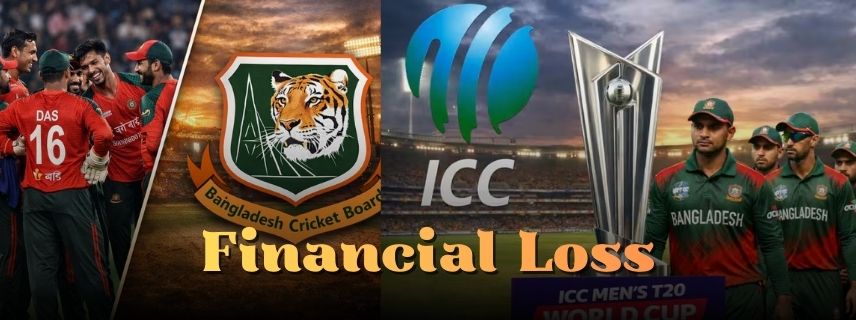
Bangladesh Set To Suffer Huge Financial Loss Over T20 World Cup 2026
Bangladesh has confirmed its decision not to participate in the T20 World Cup 2026 in India, citing security concerns. While this decision prioritizes player safety, it also poses a massive financial threat to the Bangladesh Cricket Board (BCB), potentially losing as much as $27 million, which constitutes approximately 60% of the board’s annual revenue.
Background of the Boycott
The International Cricket Council (ICC) rejected Bangladesh’s request to shift their matches to a neutral venue such as Sri Lanka. Following this, the Bangladesh government, along with the BCB, upheld their stance on the team’s non-participation, citing unresolved security risks. The Litton Das-led team was scheduled to play four matches in India, including games at Eden Gardens, Kolkata, and Wankhede Stadium, Mumbai.
Financial Implications
The boycott is expected to have a severe impact on multiple revenue streams for the BCB. Key losses include:
- Broadcast revenue from international coverage of T20 World Cup 2026 matches
- Sponsorship and advertising deals tied to tournament participation
- Player appearance and match fees from ICC events
These financial setbacks could affect both the operational budget of the BCB and player remuneration, highlighting the serious economic consequences of their decision.
Player Welfare vs Financial Loss
While the decision safeguards player welfare and aligns with government recommendations, it also places individual players at risk of losing income tied to performance and appearance in ICC events. Former captain Tamim Iqbal and current leaders like Najmul Hossain Shanto emphasized that welfare and security should remain the top priority, even as financial losses loom large.
ICC and Replacement Scenarios
Given Bangladesh’s withdrawal, Scotland is next in line to participate in the T20 World Cup 2026, based on team rankings. ICC and Cricket Scotland have not yet finalized official communications regarding the replacement, but reports indicate that Scotland could assume Bangladesh’s fixtures starting February 7.
Public and Media Reactions
The decision has sparked debates globally, with analysts discussing the balance between security concerns and financial obligations. Social media reaction has been mixed, with some applauding Bangladesh’s focus on safety and others criticizing the economic implications of missing the tournament.
Key Statements
Sports advisor Asif Nazrul highlighted that the security risks were significant and not hypothetical. He stressed that player safety, journalists’ safety, and fan welfare are paramount and non-negotiable. Meanwhile, former BCB director Nazmul Islam resigned following backlash over remarks regarding non-compensation of players.
Strategic and Long-Term Implications
The financial blow to Bangladesh cricket could impact future development programs, domestic cricket funding, and international competitiveness. Sponsors may reconsider partnerships, and players could face long-term challenges in maintaining competitive momentum on the global stage.
Conclusion
Bangladesh’s boycott of the T20 World Cup 2026 is a landmark decision prioritizing player and public safety over financial gain. While it ensures security and welfare, the monetary consequences for the BCB are unprecedented, with potential losses reaching $27 million. The situation underscores the complex interplay between sports governance, player protection, and financial viability in international cricket.